
Borrowed Light by Ben Young
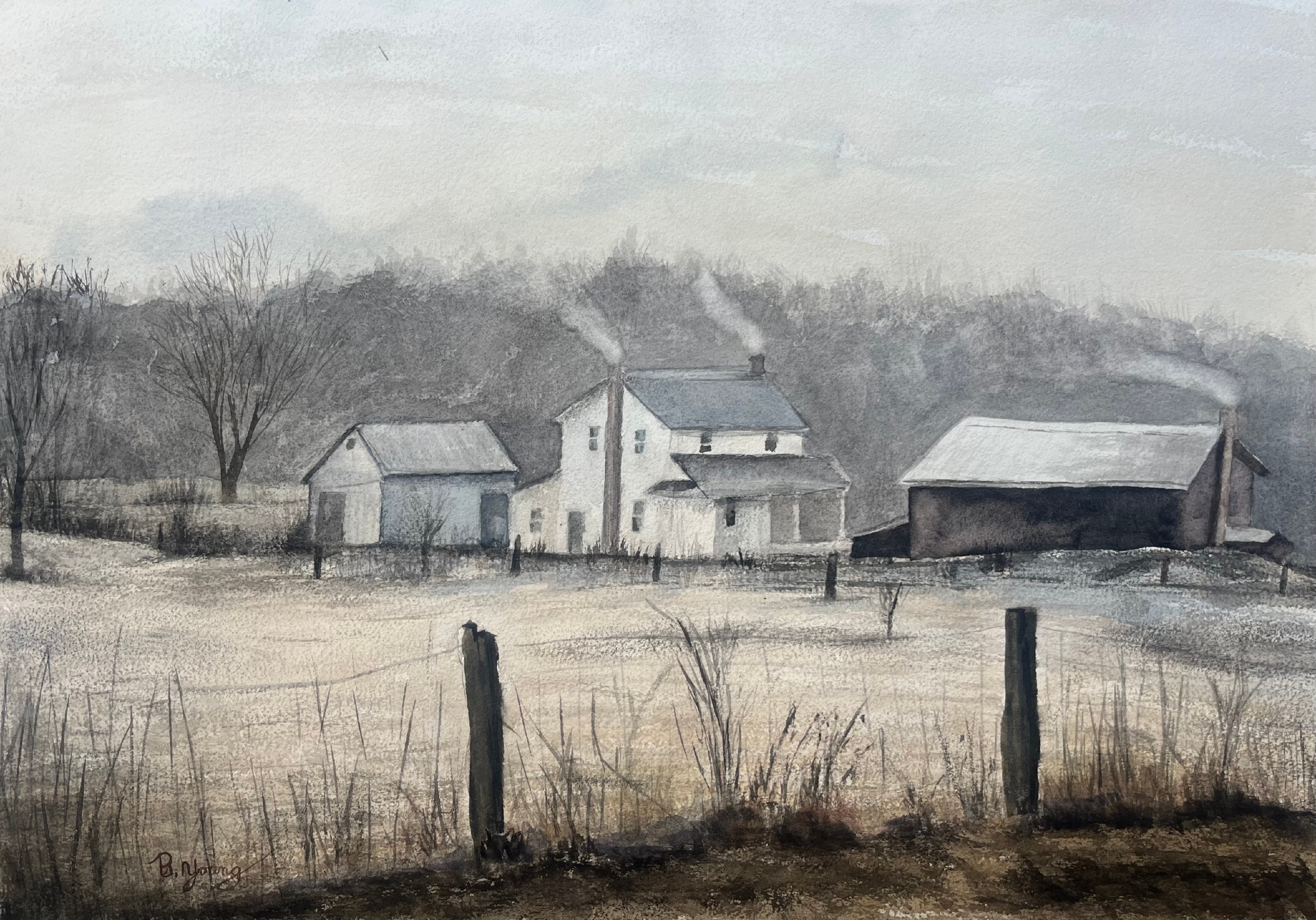
Borrowed Light.
2026.
Watercolor
on Cotton Paper.
20x14in (51x34cm).
Ben Young,
American, b. 1990.
Click Image to View Full Screen
Against the Clock - Finding Stillness in a Hurried Watercolor
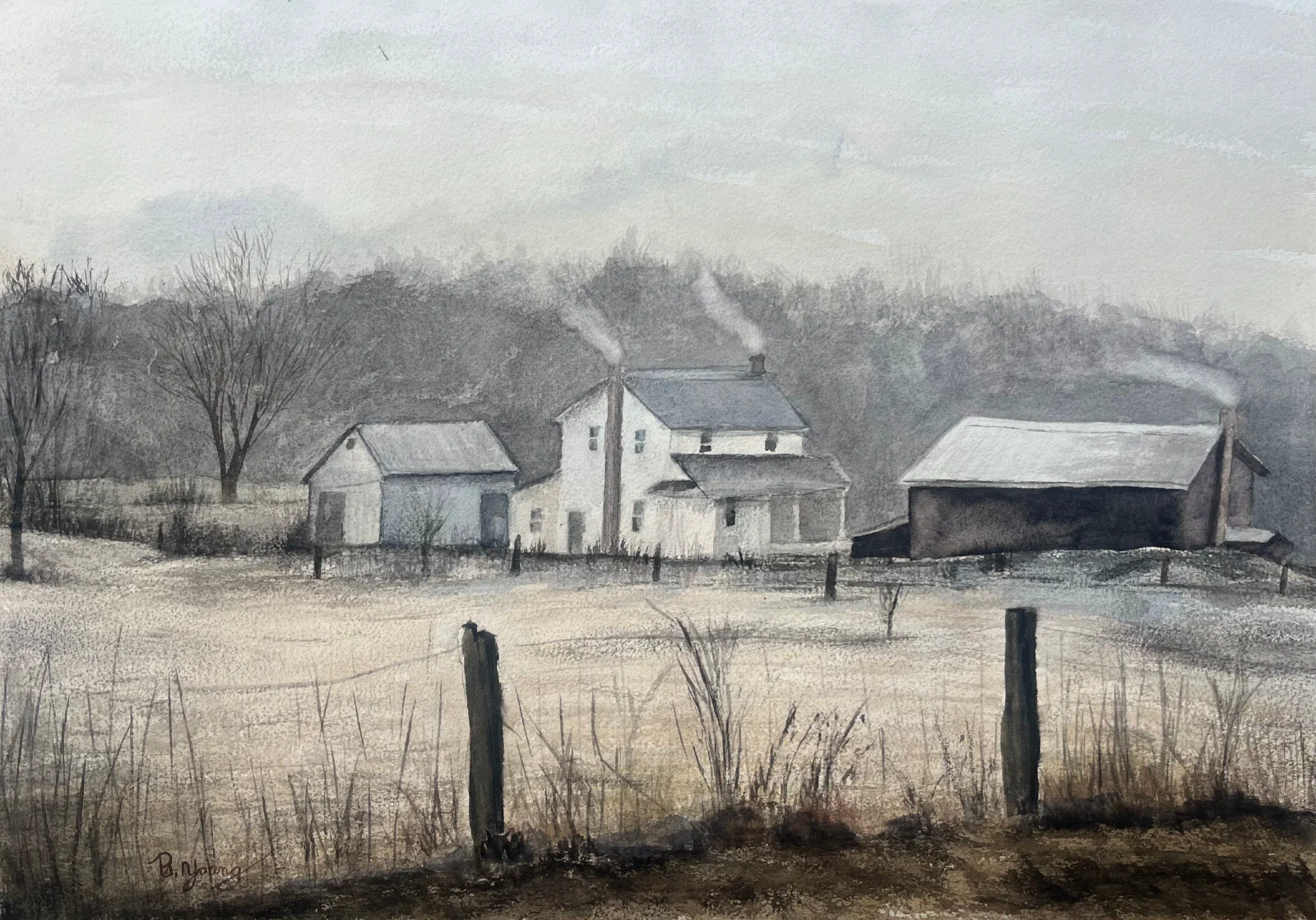
Every artist has a few default settings they rely on. For me, it’s a deep appreciation for details, texture, and the slow, deliberate building of a scene. My work under the Benjamin J. Young name often leans into narrative realism, where every fence post, shadow, and curl of chimney smoke has a story to tell.
But sometimes, the best way to grow is to deliberately break your own rules.
Recently, I decided to shake up my studio routine with a challenge: a strict four-hour time limit. No endless fussing, no microscopic corrections. Just raw paint, water, and instinct.
The Challenge of “Letting Go”
The goal of this painting was simple: stay loose. I wanted to capture the heavy, quiet atmosphere of a cold rural landscape without getting bogged down in the minutiae.
I started with a reference photo of a winter homestead—a “borrowed view” from a photographer whose work, if I’m being entirely honest, usually leaves me a bit cold. But there was something in the bones of the composition that I knew had potential if I could just translate it through my own brush. It needed a bit of saving, a bit of quiet narrative to bring it to life.
I mixed my washes of muted gray, earth brown, and soft blue, set the timer, and began.
The Artist’s Dilemma: The problem with telling yourself to “be loose” is that your hands have a mind of their own. Your muscle memory knows exactly how it likes to work, and it will fight you for control the second you look away.
For the first two hours, things went according to plan. The sky came together in a broad, atmospheric sweep. The background treeline was soft and hazy. But as the washes began to dry and the timer ticked down, my natural instincts started to creep back in.
The Beautiful Failure
Before I knew it, I was swapping my larger mop brushes for a fine detail brush. I found myself carefully rendering the weathered wood of the foreground fence posts, adjusting the sharp edges of the barn roof, and painting the delicate rising smoke from the chimneys.
By the time the four-hour alarm went off, I had to laugh. I had completely “failed” the looseness challenge.
But looking at the finished piece on the easel, I realized something important. The tension between those two styles—the hurried, watery background washes and the deliberate, sharp focal points—is exactly what gave the painting its depth. The “failure” to stay completely loose was just my natural style refusing to be rushed.
Sometimes, the clock doesn’t change how you paint; it just forces you to make decisions faster. And in this case, those quick decisions left me with a quiet, winter landscape that I’m incredibly proud of.