
Ben Young - Beauty in Darkness and Pain by Samuel Brooks
An in-person interview with Ben Young, an emerging and award winning watercolorist and oil painter. Known for his emotional narrative works and portrait paintings.
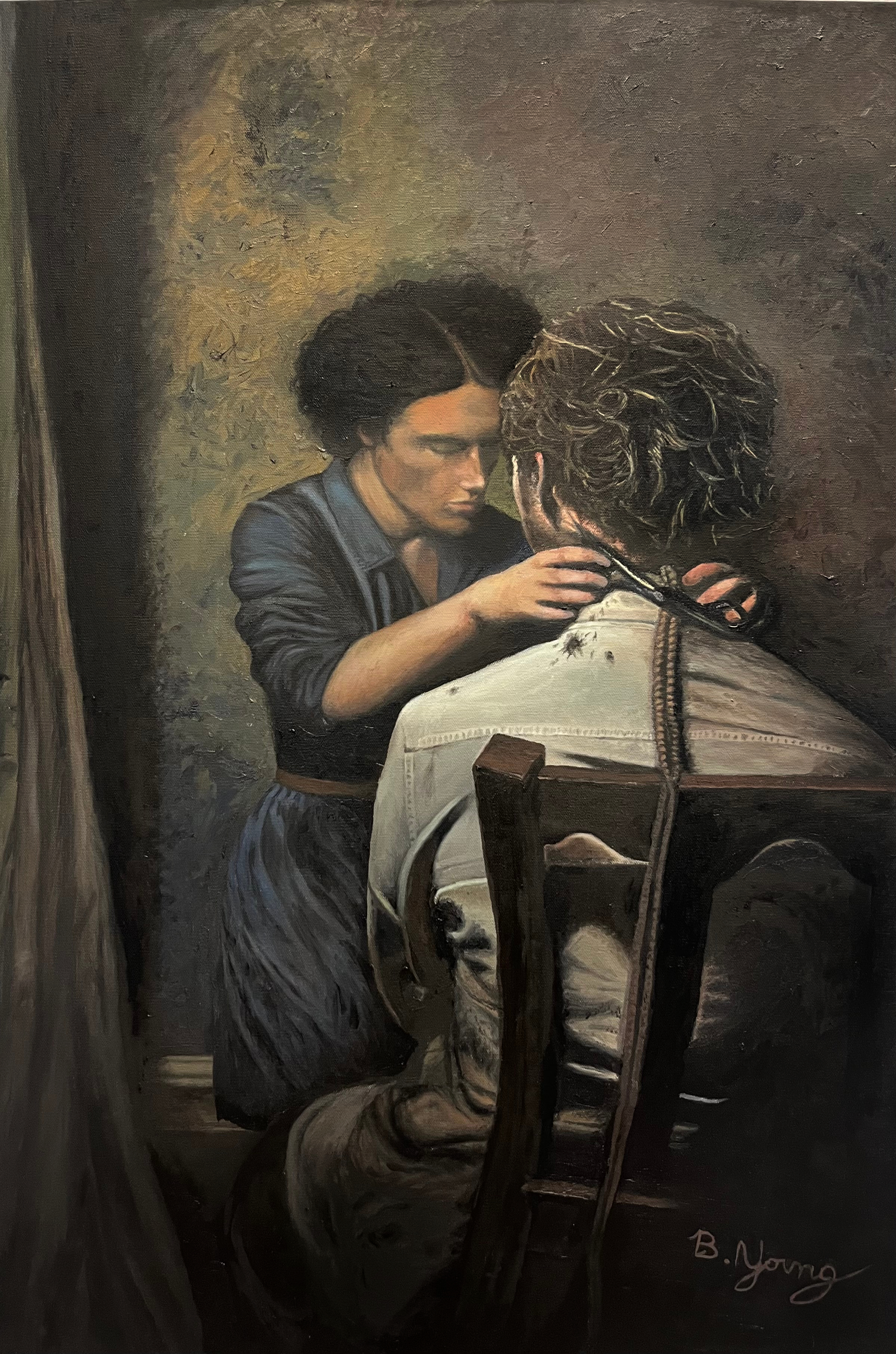
I first encountered the work of Ben Young less than a year ago during an exhibition at a local cultural center. Among the assembled pieces, one painting immediately commanded attention. Hallelujah depicted an intimate, suspended moment between two intertwined figures—so private in nature it felt almost intrusive to witness. Yet it was impossible to look away.
At the time, Young was virtually unknown. He had no established reputation within the local art community, no formal art education, and no prior accolades to precede him. And yet Hallelujah displayed a level of compositional control and emotional restraint reminiscent of the Dutch masters, paired with a vulnerability that can only emerge from deep personal honesty. It was clear that this was not merely a promising newcomer, but an artist operating with unusual intentionality.
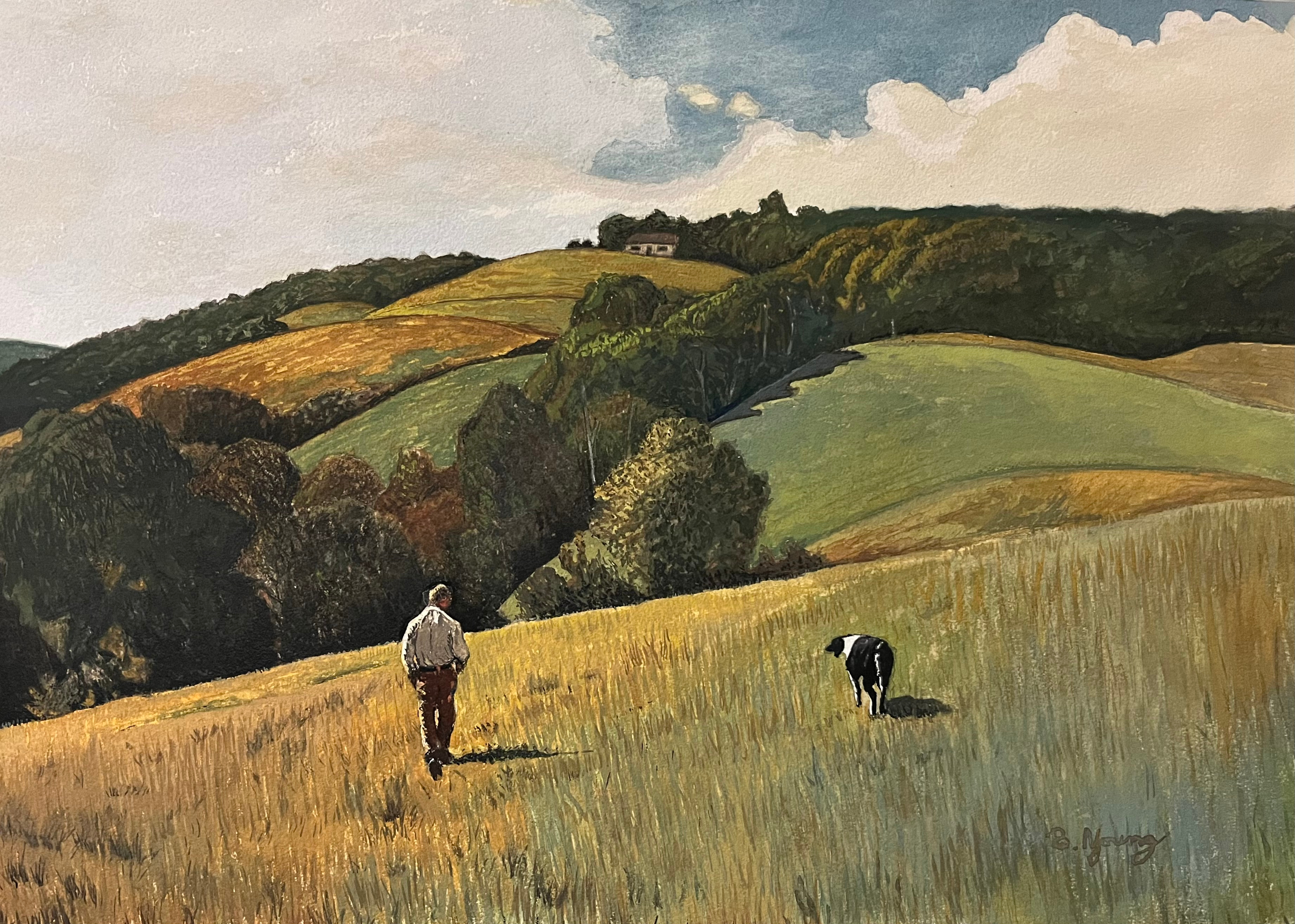
In under two years since first picking up a paintbrush, Young’s work has advanced at a pace rarely seen. He has won multiple juried awards, attracted national attention for his watercolor One Last Walk With Izzy, and nearly sold out a limited release of reproductions of the piece. Several of his original works have sold at price points atypical for an emerging artist, and his practice is now beginning to attract international interest—milestones that many artists spend decades pursuing, if they reach them at all.
Yet technical achievement alone does not explain the response to Young’s work. What consistently draws viewers is his command of emotional resonance—an ability to construct paintings that feel lived rather than observed.
It was this quality that prompted an invitation for an exclusive interview.
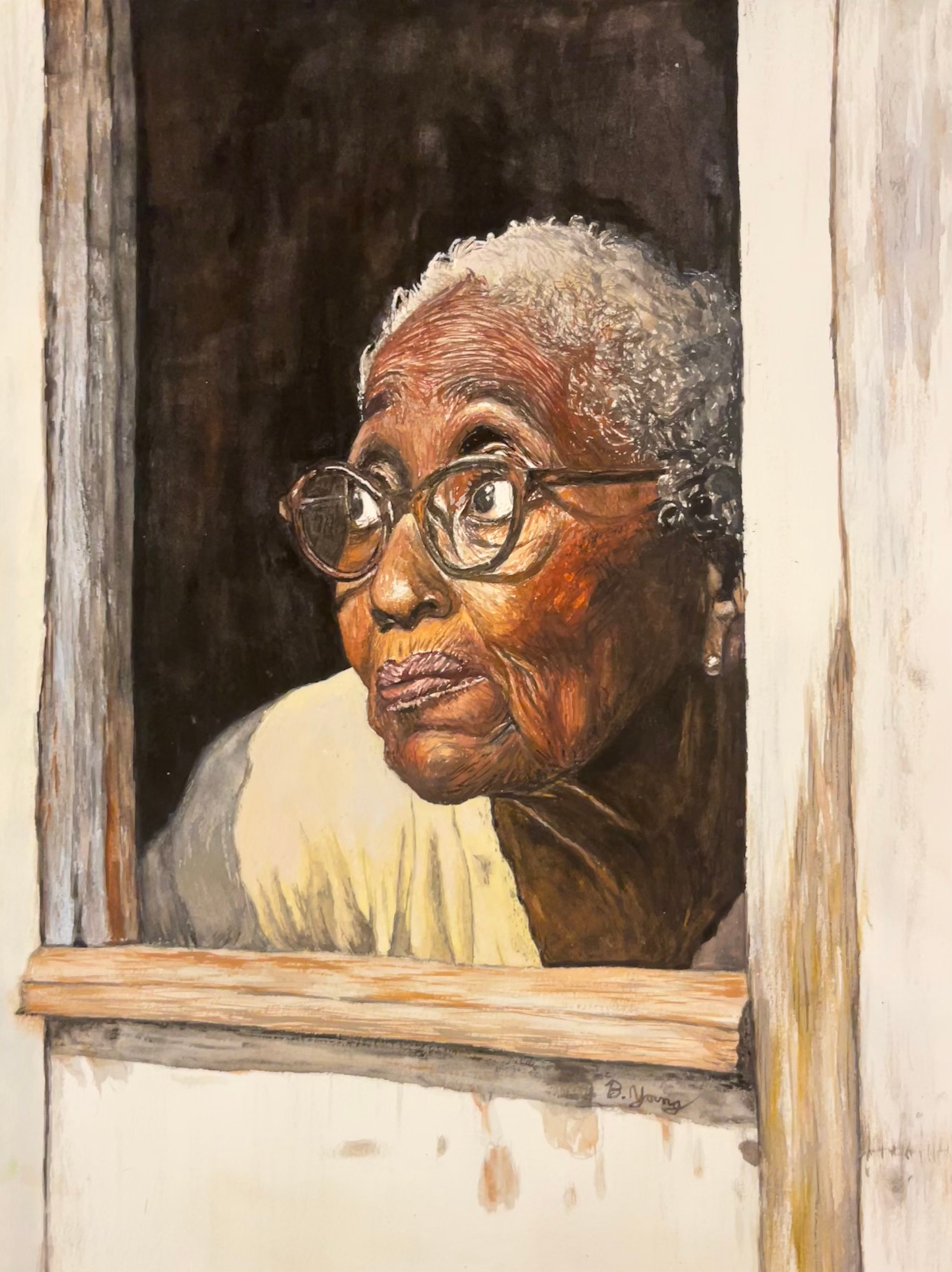
On Accelerated Mastery
Two years is an unusually short time to achieve this level of technical and narrative control. How do you explain that?
Young describes his entry into painting as neither planned nor romanticized.
“Painting started from boredom,” he explains. “Maybe even necessity. I needed something to occupy my mind during an extremely stressful period of my life.”
Initially reserved, Young gradually opens as the conversation moves into intellectual territory.
“I made a conscious decision early on to deprioritize color,” he says. “My working principle became: emotion first, values second. If I could make a viewer feel something—or recognize an experience—then the painting had succeeded. That required mastering realism and understanding light.”
Young is quick to reject the notion of innate genius.
“It wasn’t talent,” he says. “Obsession has always been my driving force.”
A Breakthrough Moment
Your painting One Last Walk With Izzy resonated nationally and nearly sold out in reproduction. Why do you think it connected so widely?
“Because it’s about a moment you never get back,” Young replies after a pause. “Everyone shares one of those.”
The painting imagines a final walk with his late dog—an experience he never had the opportunity to share. Rendered with restraint and emotional precision, the piece avoids sentimentality, instead offering a quiet, devastating honesty.
The response was immediate. Messages arrived from across the country—from individuals grieving the loss of partners, parents, pets, or versions of themselves.
“I didn’t anticipate that reaction,” Young admits. “But people recognized something shared.”
Loss as Foundation
There is a discernible darkness beneath your work. You have spoken publicly about witnessing your fiancée’s death. How does that experience shape what you paint?
Young answers without hesitation, though his expression grows solemn.
“When you watch someone you love die, the world stops pretending to be stable,” he says. “Everything after that feels provisional.”
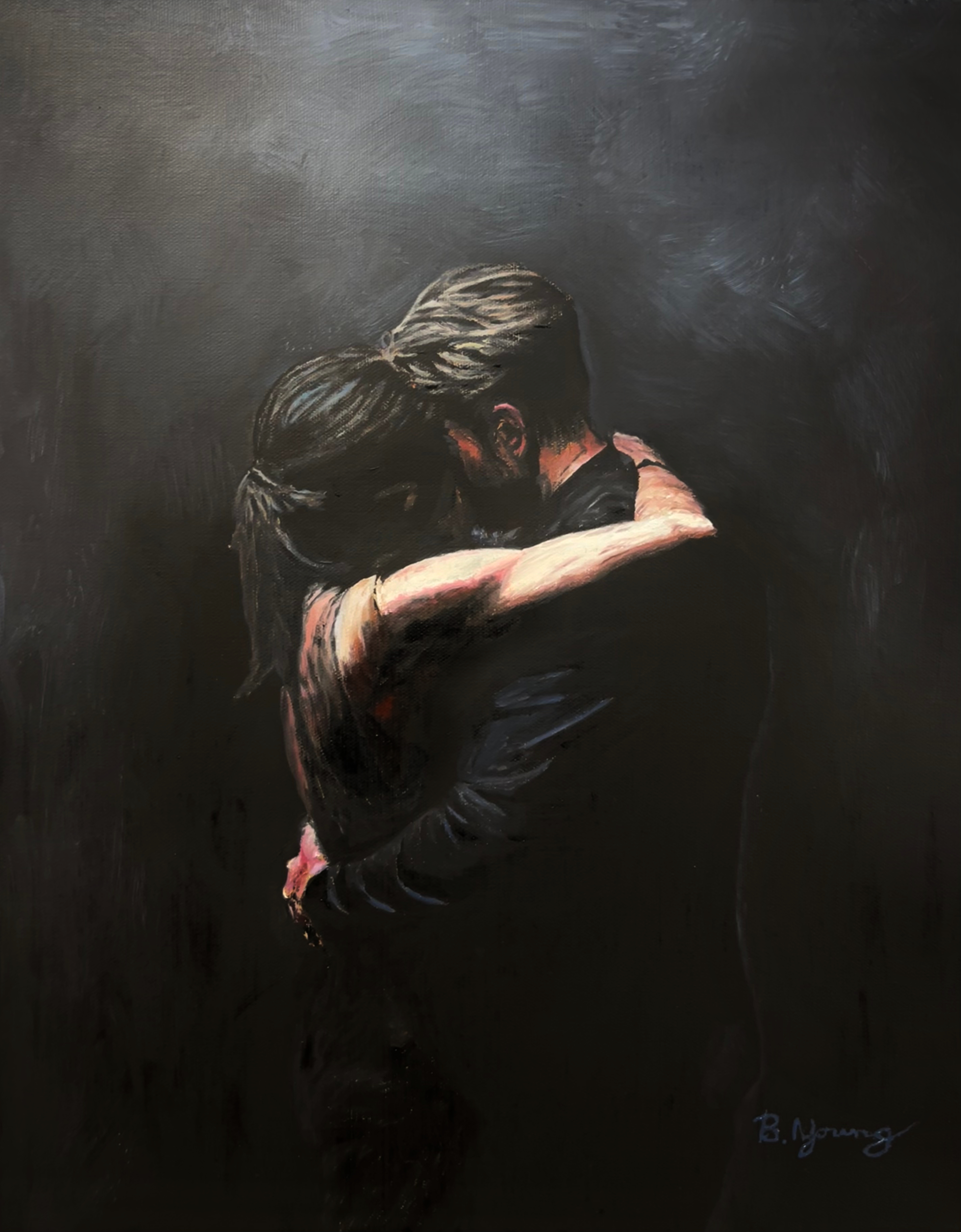
Rather than depicting trauma directly, Young’s work reflects its aftermath—figures suspended in time, unresolved narratives, and light that never fully settles.
“I haven’t painted that trauma explicitly yet,” he says. “But the echo of it is already present.”
An Unspoken Departure
You left a successful, well-paying career to pursue art full time. Why?
This marks a shift in the interview.
“There’s a story there,” Young says carefully. “But it’s not ready to be spoken yet.”
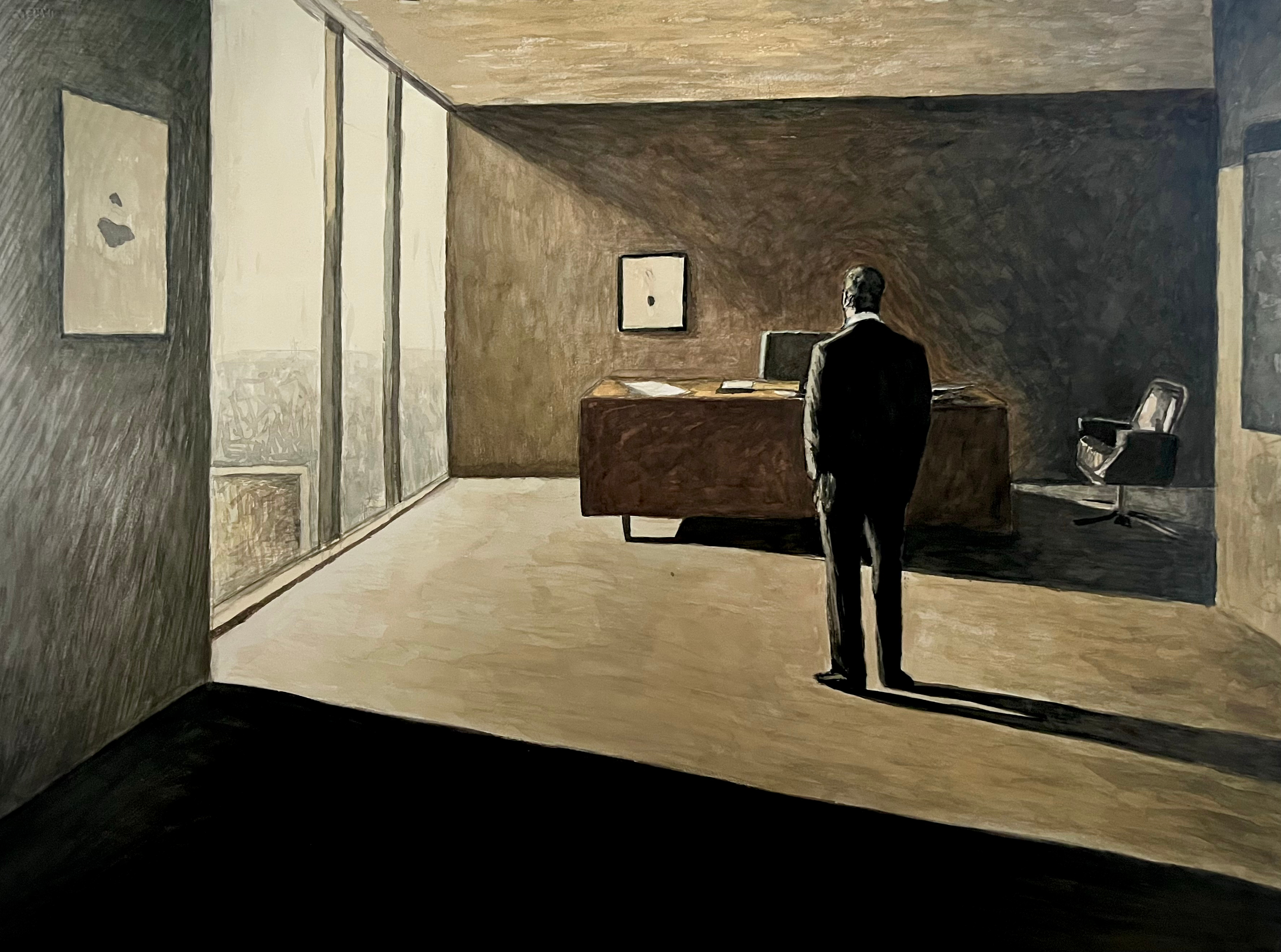
He does, however, reference Hallelujah as a pivotal work.
“That painting represents a threshold,” he explains. “It points toward something unresolved—something that marks the beginning of why I left.”
Further detail is withheld.
“Some truths emerge in paint before they emerge in language.”
Toward Darker Territory
Your recent narrative works feel heavier and more uncertain. Is this intentional?
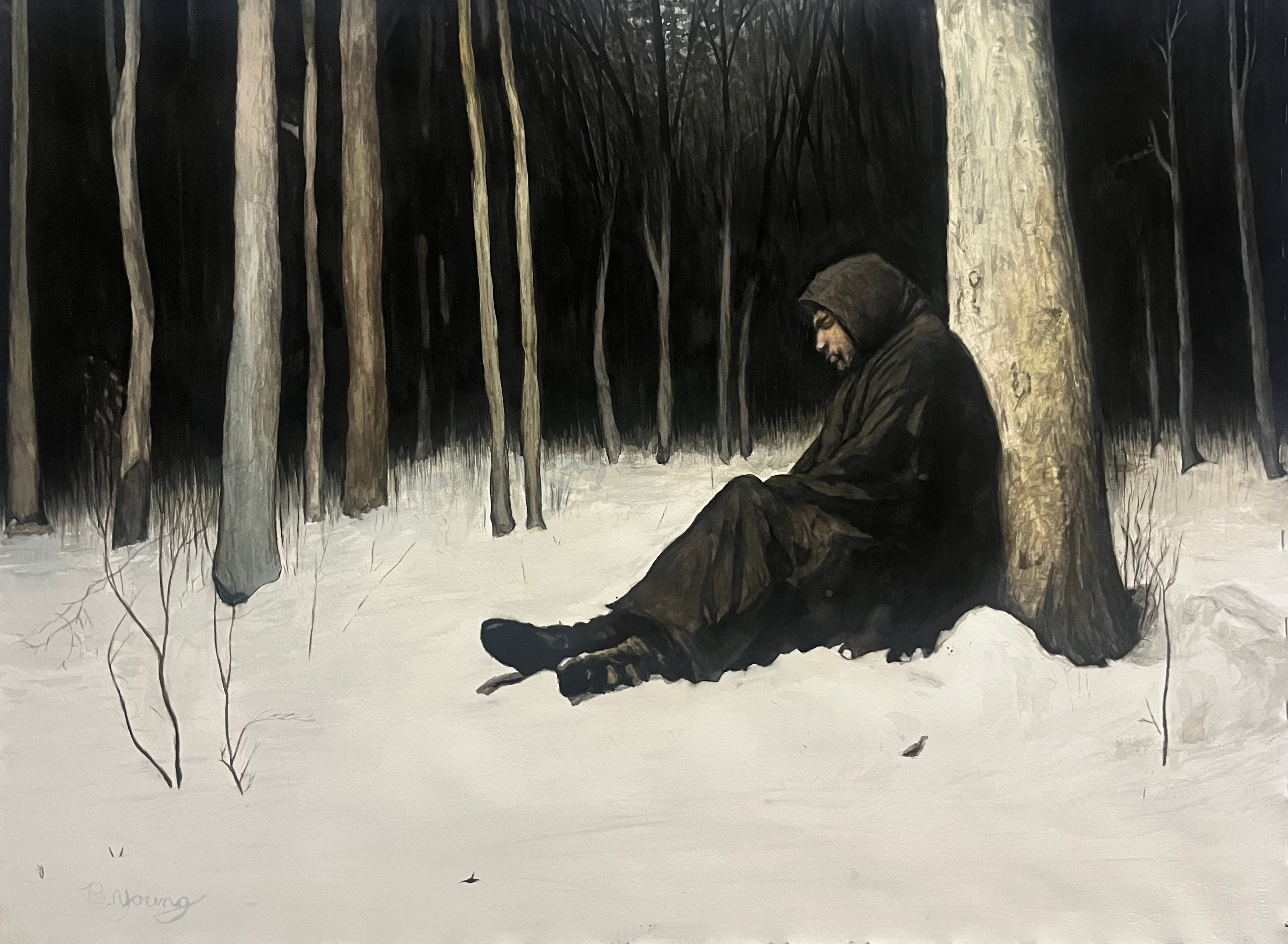
“I’m running out of places to hide,” Young says plainly.
He describes his earlier work as driven by survival—learning, proving, establishing momentum. His current trajectory, however, signals a transition.
“I’ve been preparing to paint my darkest and most traumatic experiences,” he says. “The gravity of darkness is what allows light to exist meaningfully in my work.”
The emerging body of work suggests a shift away from isolated loss toward broader consequence—where ambition, intelligence, grief, and memory intersect.
Hidden Narratives and Foreshadowing
As the interview progressed, it became clear that gaps remained. Former colleagues declined to discuss the pivotal events that led to Young’s departure from his previous career, often citing respect and discretion. The more information surfaced, the more complex the picture became. Accounts consistently described Young as kind, intelligent, and deeply respected—yet there was an undercurrent of something unresolved.
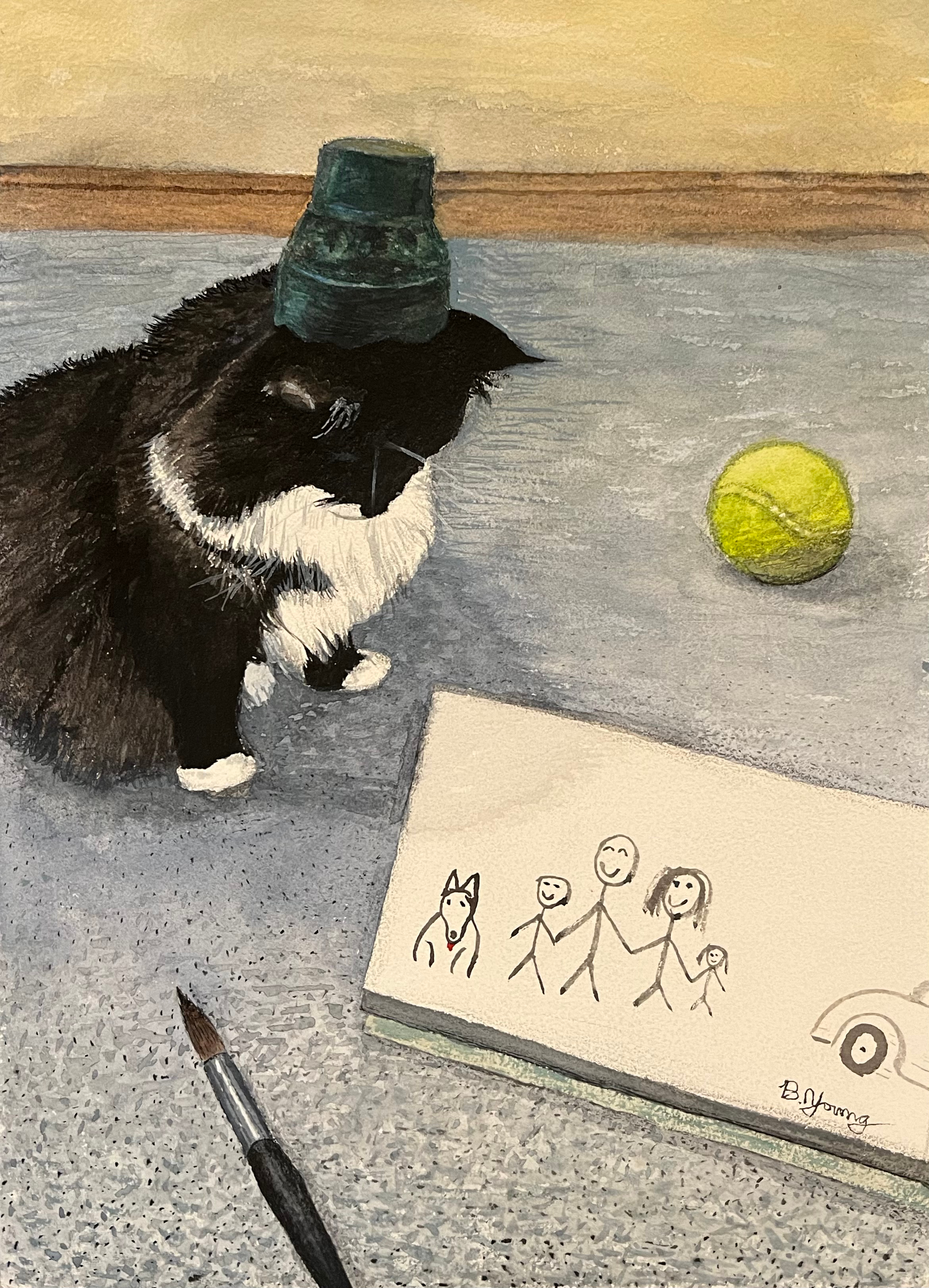
Young has acknowledged embedding foreshadowing and coded imagery within his work. In The Artist’s Assistant, a seemingly playful stick-figure drawing in the background—watched over by a feline companion—reveals darker intent upon closer inspection. The drawing depicts a family near a roadway, a car speeding toward them: a reference to the automobile accident that claimed the lives of his fiancée and unborn daughter.
What appears lighthearted at first glance becomes devastating upon recognition.
It is possible that answers lie not in direct statements, but within the paintings themselves. As Young continues to develop his primary body of work, those narratives may gradually surface.
For now, his paintings remain both an invitation and a warning: what is visible is only part of the story—and the rest is still unfolding.
Original Paintings & Limited Reproductions
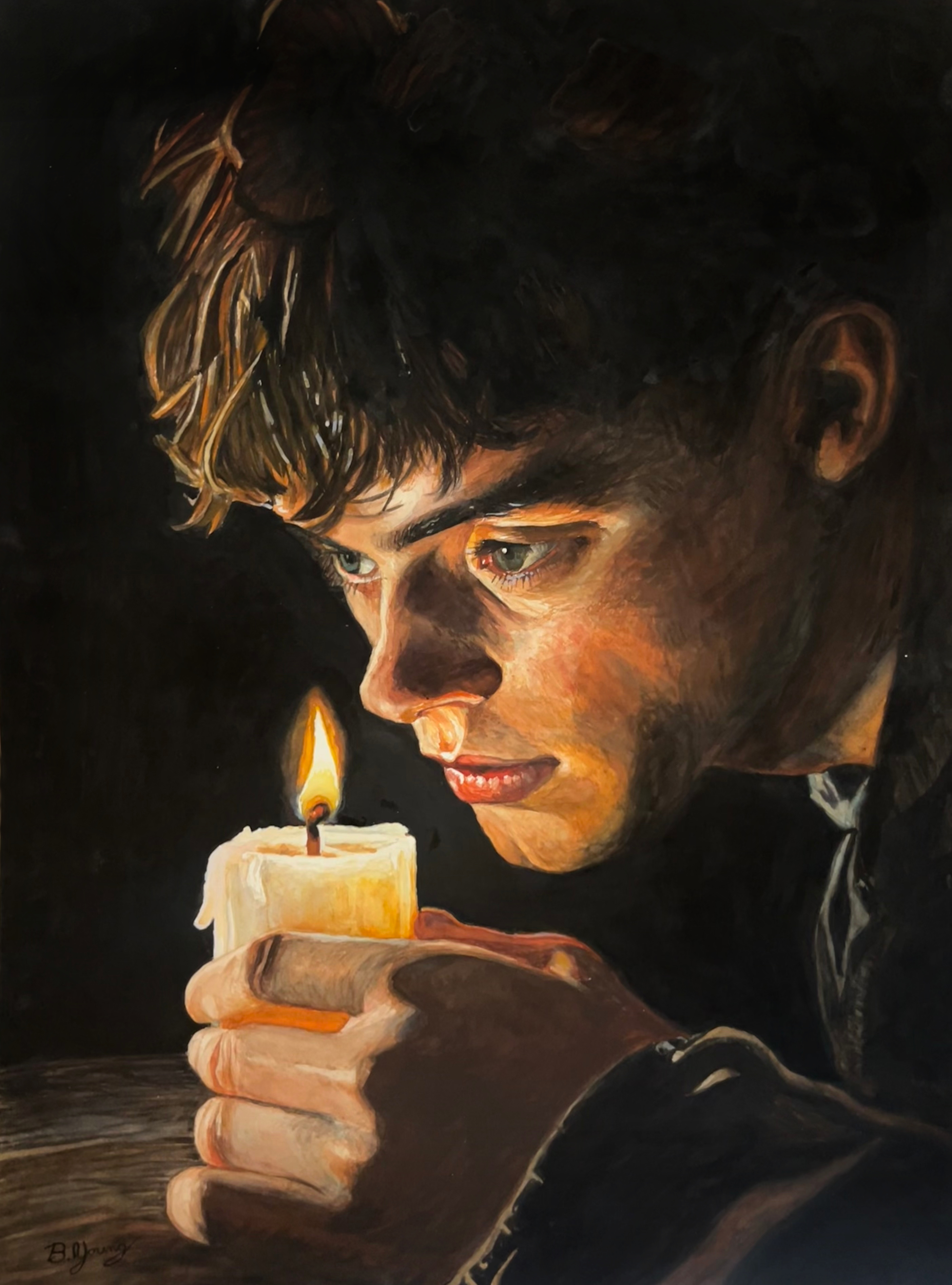
Collectors interested in acquiring original works or limited-edition releases by Ben Young are encouraged to visit his official website, where select paintings, availability information, and private acquisition inquiries can be made directly.
Learn More