Trauma, Love, Care, and Deceit
In the deepest shadows of PTSD after my fiancée’s death, I existed in a state of numbness, survival, and emotional suppression for six years, unable to truly feel. Pain and trauma were things Gertrude recognized immediately, having walked through her own, and she forced her way into my life when I was completely locked away. Under her gentle care, she tended to me, pointing out the ways my soul had been fractured and showing me what needed to be done to begin healing. Through her intimate, grounding, and fiercely compassionate presence, I began to feel again, accessing emotions I thought were gone forever.
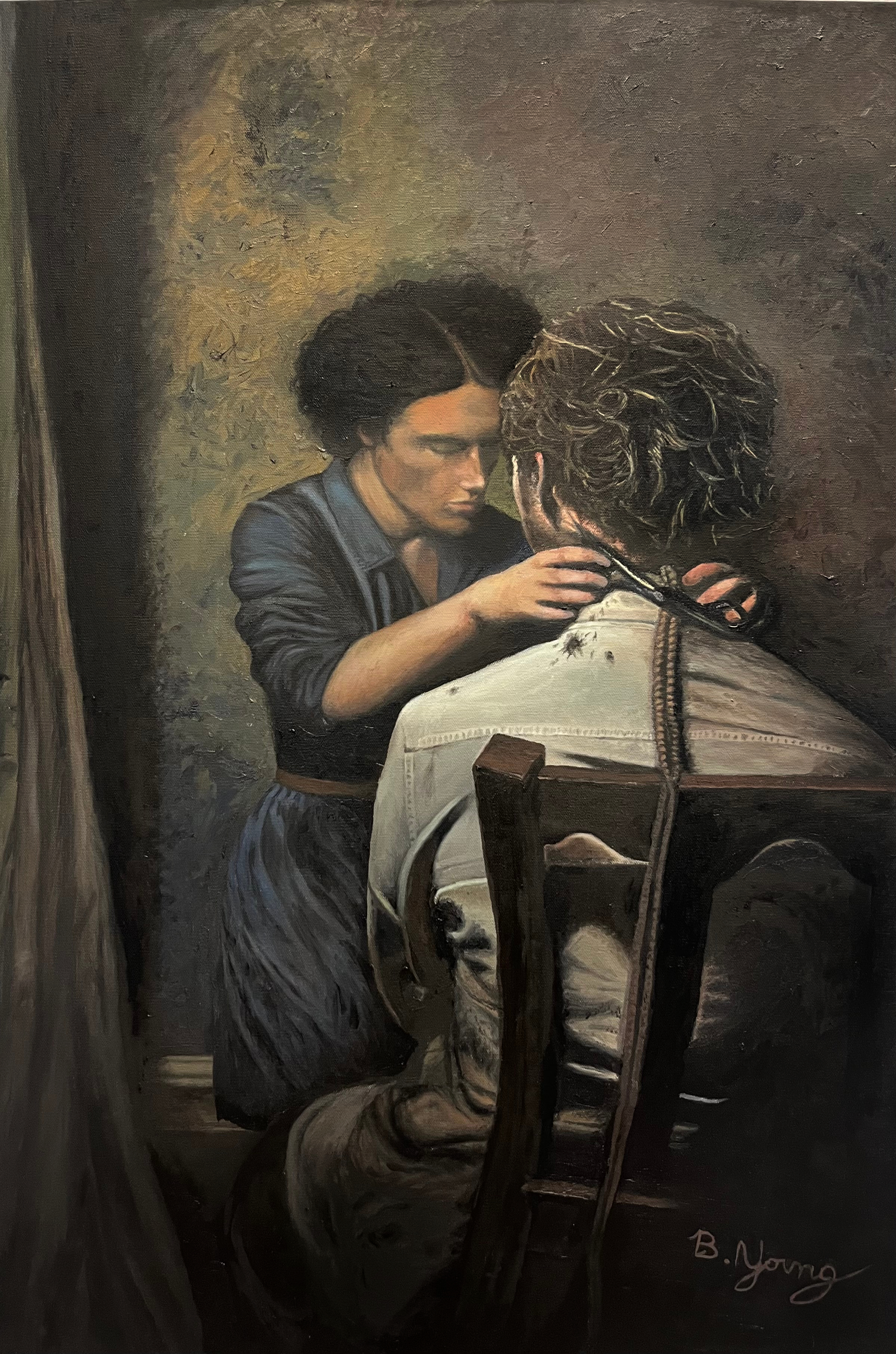
Intimacy between us felt unshakable at first, but like the song’s verse, the story eventually turned. Trust proved fragile, and my own lack of courage to speak my truth led to a sudden, painful reversal. Instead of care, distance grew between us, and the bond we shared was ultimately pierced by betrayal. Now, this painting sits in that exact duality—the way love can be both the hands that free you and the hands that bind you.
Heartbreak was how our story ended, yet Gertrude was the first person to show me deep, caring love since losing AJ. Even with all the discord she caused, she was also the one who broke open the locked door inside me. Reflecting on it now, I know that if it wasn’t for Gertrude, I wouldn’t be alive today.
Altogether, Hallelujah is not just a painting of two figures. Specifically, it is a portrait of the sheer complexity of love and trauma. Simply put, it shows the way another person’s touch can change the course of your life, for better and for worse.